
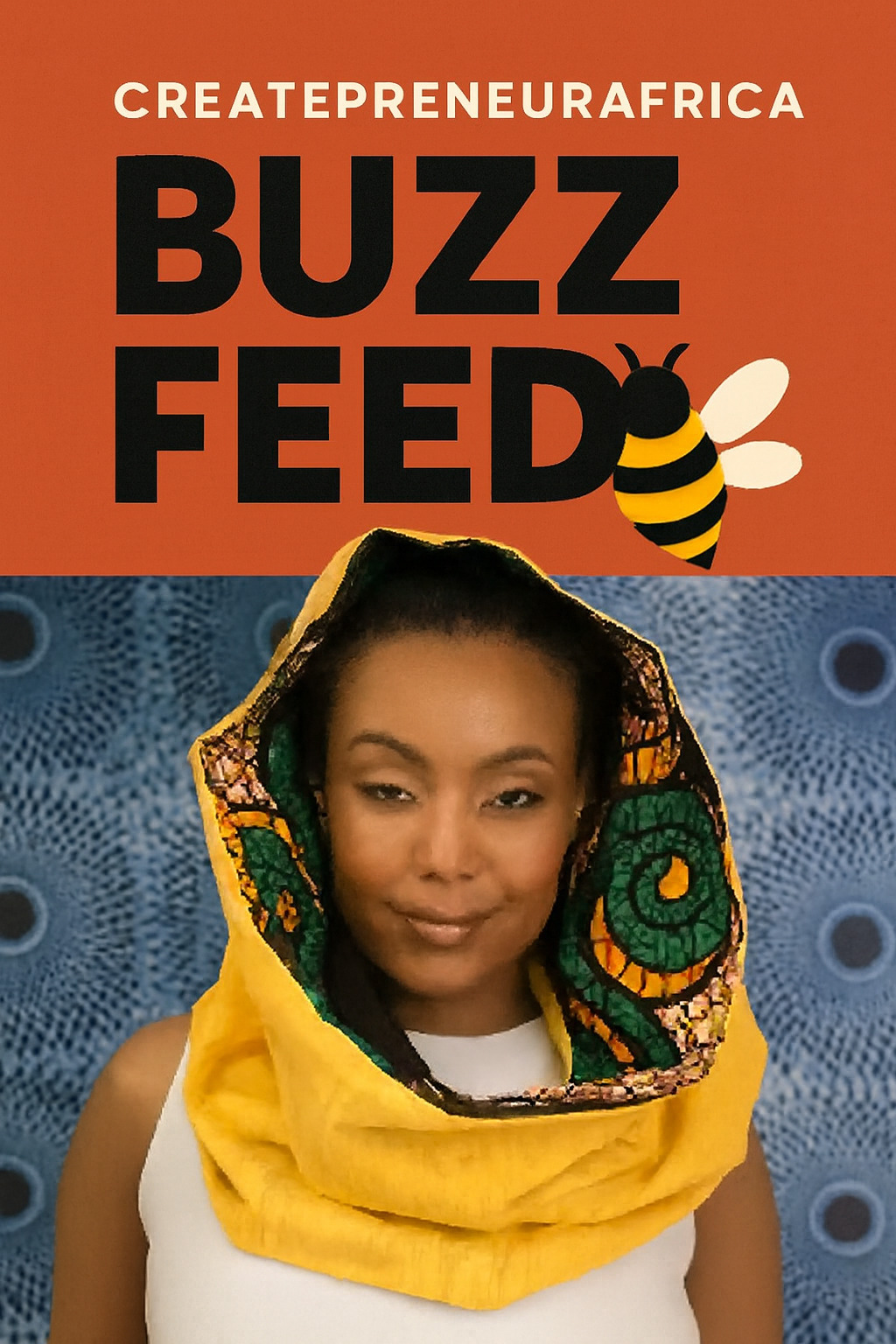
In a world where fast fashion often drowns out ancestral rhythm, Hortense Mbea moves like a quiet drumbeat, steady, sacred, and unforgettable. As Mimi Kalinda so beautifully captured in her LinkedIn post, every gesture Hortense makes is a prayer, every garment a verse in Africa’s living epic.
Born abroad but called home by memory, Hortense returned to the continent in 2002, drawn to Addis Ababa by the echo of her father’s diplomatic legacy. Her early path, rooted in language and diplomacy, eventually gave way to a deeper calling: to become a keeper of African memory through design.
From Interpreter to Interweaver
While working at the African Development Bank, Hortense encountered the continent’s vast creative wealth through the Fashionomics Africa initiative. What began as admiration soon became a vocation. In 2017, she began crafting jewelry. By 2019, she launched her first clothing line at Hub of Africa Fashion Week. Her debut collection, I’m Every Woman, was a love letter to strength and joy.
Then came Intore, a tribute to Rwanda’s dance traditions. And most recently, Bamun: A Royal Wedding, an homage to her half-sister and the sacred textile heritage of the Bamoun kingdom. From Addis to Costa Rica to Shanghai, her work travels like a whispered story passed from elder to child.
“Because of that sacredness, I never sell Ndop pieces; I only use them to tell stories.” — Hortense Mbea
A Continent in Every Stitch
Hortense’s atelier is not just a studio, it’s a sanctuary. She works with artisans from 15 African countries, honoring textiles like Shemma (Ethiopia), Bogolan (Mali), Baule (Côte d’Ivoire), and Mandjak (Senegal). Her collections are not seasonal—they are ancestral.
Her latest, Neema, crafted from barkcloth and inspired by the spirit of the forest, debuted at Giants of Africa. It’s a reminder that fashion, when rooted in memory, becomes more than adornment—it becomes archive.
The Soundtrack of Legacy
If Bamun had a soundtrack, it would begin with the heartbeat of Africa,the drums. For Neema, she collaborates with Ethiopian-French artist Iri Ji, whose voice, she says, “sounds like Mother Africa herself.”
Hortense is not just a designer. She is a griot. A memory keeper. A bridge between what was, what is, and what must be remembered.
🔗 Read Mimi Kalinda’s full tribute to Hortense Mbea on LinkedIn





Leave a Reply